

Gold Hits Record High as Investors Seek Safe Haven
Navigate institutional uncertainty and protect your wealth
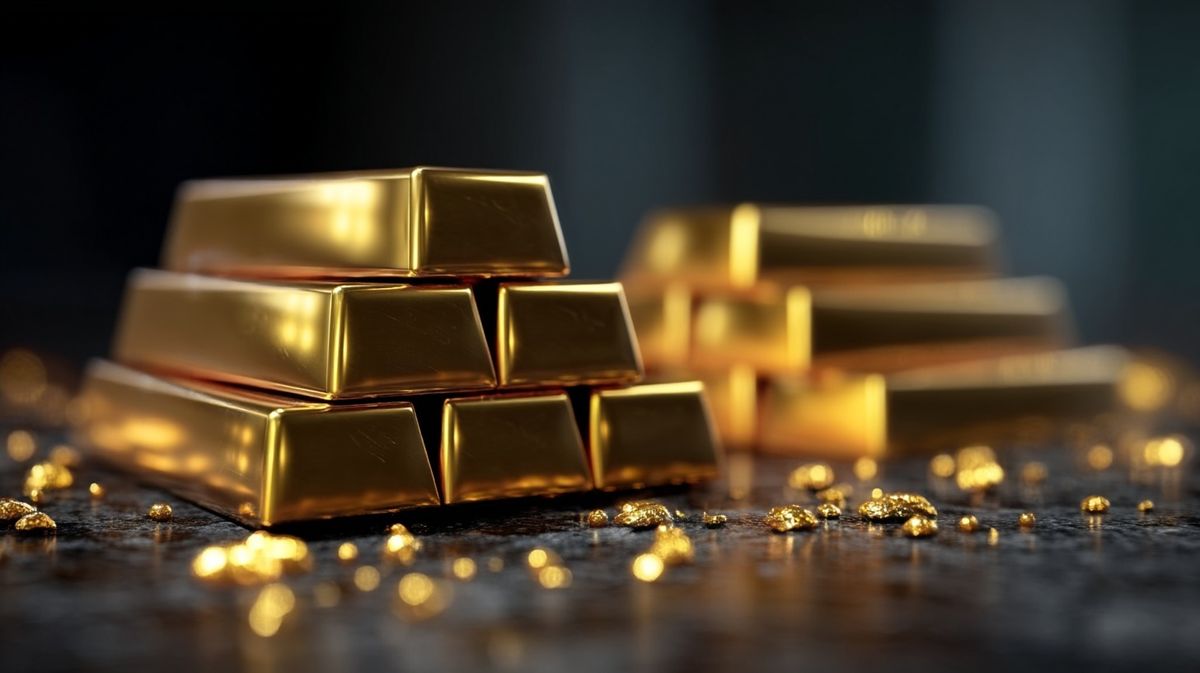
Gold just hit a record high of $3,508 per ounce this week, a remarkable 33% gain for 2025.
It represents a fundamental shift in the investment landscape that demands serious attention from portfolio managers and institutional investors.
The Federal Reserve Factor
The primary driver behind gold's historic rally is crystal clear: markets are pricing in a 90% probability of a Federal Reserve rate cut at the September 16-17 meeting.
When interest rates fall, gold becomes more attractive because it doesn't pay dividends or interest, making the opportunity cost of holding it much lower.
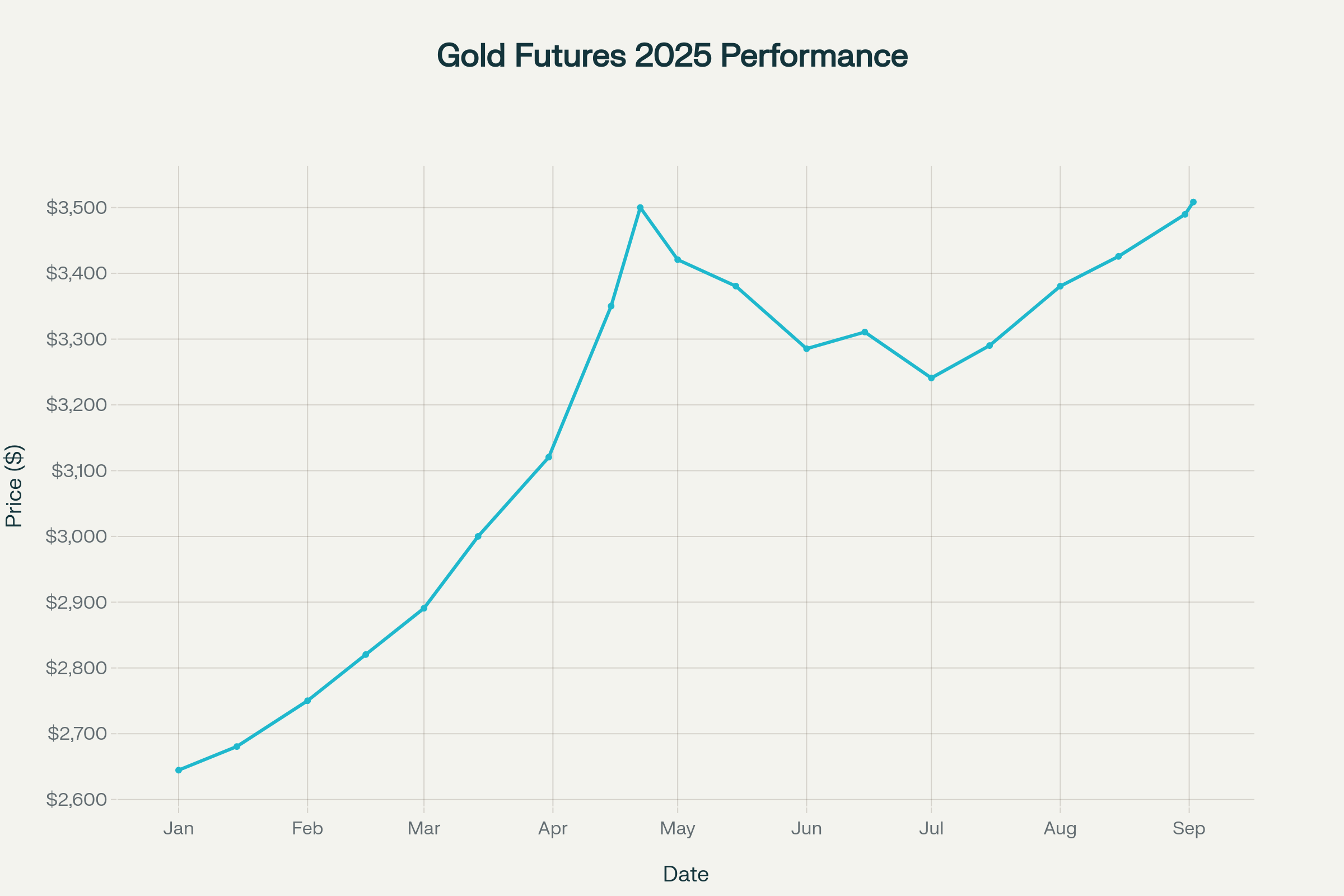
This near-certainty of monetary easing has created ideal conditions for precious metals.
Political Pressure on Fed Independence
Beyond traditional monetary policy, gold's surge reflects deeper concerns about institutional stability.
President Trump's attempt to remove Fed Governor Lisa Cook has raised serious questions about Federal Reserve independence, something markets haven't had to price in since the 1970s.
Treasury Secretary Scott Bessent's defending Trump's power over Fed independence while saying the Fed has "made a lot of mistakes," suggests that political influence in monetary policy may become a common issue.
Dollar Weakness
The US Dollar Index has fallen 9.2% YTD, marking its first-half decline since 1991. At 97.8, the dollar is trading at five-week lows, its weakest level since early 2022.
Several factors are driving this dollar decline:
Monetary expansion: The money supply (M2) reached $21.942 trillion by May 2025, representing massive liquidity inflow into the system.
Fiscal concerns: Growing budget deficits are raising questions about long-term US fiscal sustainability.
Inflation pressures: Tariff-driven price increases are expected to add 1.8% to consumer prices, creating stagflationary risks.
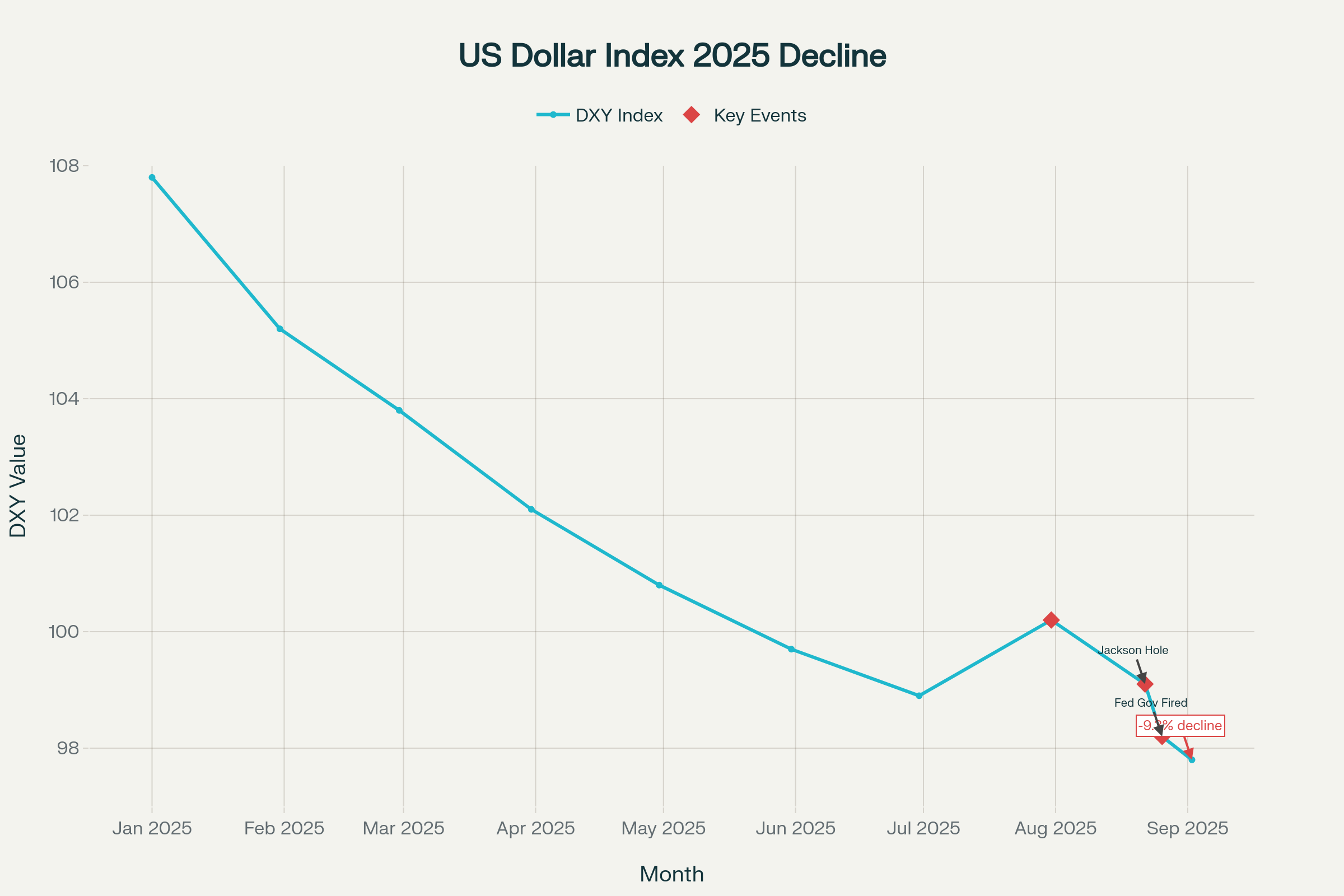
Currency strategists at major institutions now project the dollar could weaken another 6% by mid-2026, with Morgan Stanley targeting the 91 level over the next twelve months.
ETF Performance and Institutional Flows
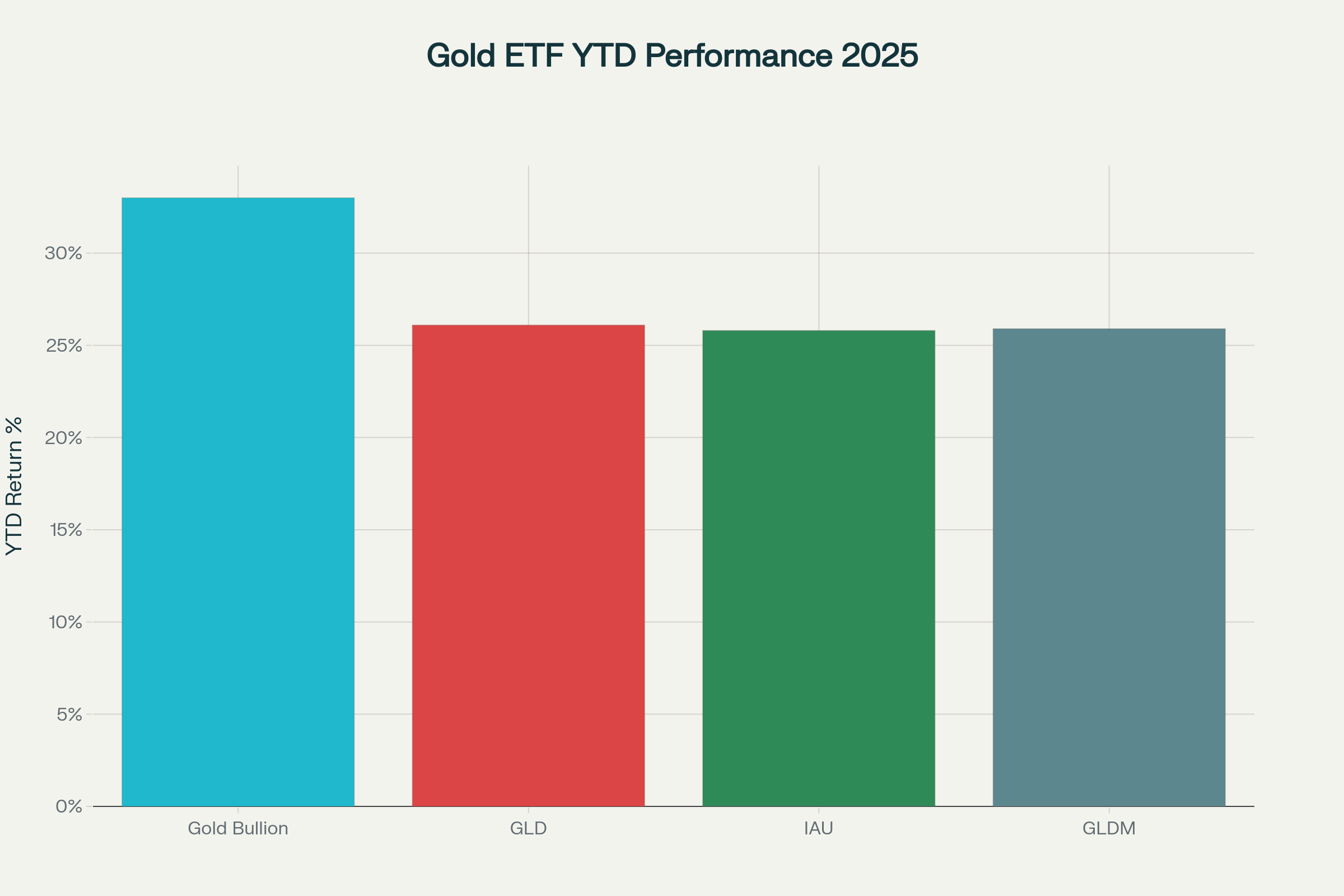
SPDR Gold Shares (GLD) has delivered 26.1% YTD returns, while mining-focused ETFs have posted gains of 70-80% in some cases.
The SPDR Gold Trust has expanded to its largest size since September 2022, while the iShares Gold Trust reached its biggest holdings since November 2022.
Experts Price Targets
Major investment banks have revised their gold forecasts upward:
- Goldman Sachs: $3,700 (upgraded from $3,300)
- JP Morgan: $4,000 by Q2 2026
- Bank of America: $3,500 (up from $3,000)
- UBS: $3,500 (raised from $2,800)
Goldman Sachs analysts forecast that strong demand from central banks will increase the price of gold by approximately 9% by the end of 2025.
J.P. Morgan's analysis has highlighted a strong mathematical argument for upward pressure on gold prices, citing a sensitivity model and demand forecasts.
The analysis estimates that a quarterly increase of 100 tonnes in investor and central bank assets corresponds to roughly a 2% quarterly price increase.
What This Means for Your Portfolio
Today's gold rally creates a compelling investment opportunity driven by two simple factors: falling interest rates make gold more attractive, and inflation concerns are pushing investors toward hard assets.
How to Position Your Portfolio:
Start with 5-10% allocation: Most risk management models recommend this range for gold exposure. It's enough to provide meaningful protection without dominating your returns.
Choose your safe haven: Gold ETFs like GLD and IAU give you direct exposure to gold prices with the convenience of trading stocks. Gold mining stocks offer higher potential returns but come with significantly more volatility and company-specific risks.
Consider currency exposure: If you hold international investments, the weakening dollar adds another layer of complexity that may require hedging strategies.
Final Thoughts
Gold's spectacular 33% gain this year isn't just a commodity story; it's a reflection of major changes in how money and markets work.
The Federal Reserve is cutting rates while political pressure threatens its independence, the dollar is weakening dramatically, and inflation is being driven by factors central banks can't control.
For investors looking to protect wealth against currency debasement and institutional uncertainty, gold offers both defensive characteristics and growth potential.
The world's largest investment institutions are already positioning for this new reality, and individual investors should consider doing the same.



Comments ()