China calls it "fear mongering." The CEOs who warned of AI disaster are actually doing the opposite of what Trump wants.
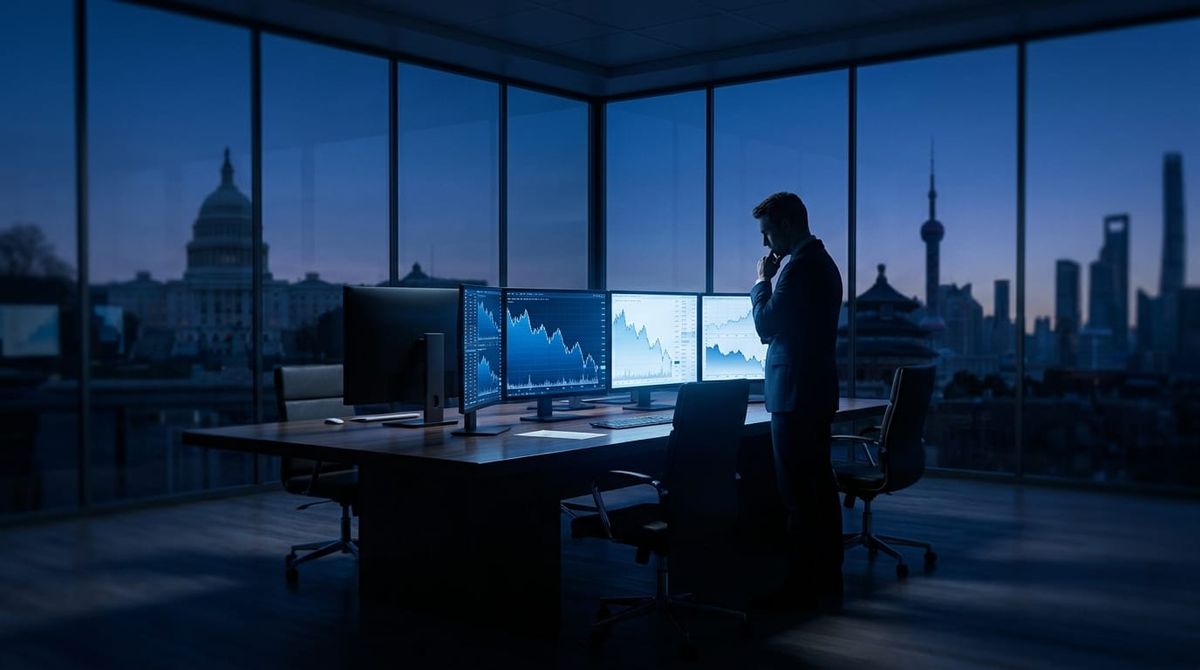
For three years, AI stocks fell when Washington or Beijing threatened them; on Monday they fell because the people building AI told everyone to pump the brakes — and they did it. The move wasn’t driven by a geopolitical shock, an earnings miss, or a chip ban. It was a self-inflicted selloff triggered by a single essay and the public alignment of three of the industry’s most influential CEOs.
The essay, published by Anthropic’s Dario Amodei, argued companies and governments must slow the pace of capability improvements and embed third-party evaluators to monitor safety practices. OpenAI CEO Sam Altman and SpaceX and xAI chief Elon Musk publicly supported the call for a slowdown. The move is a warning signal for the AI-capex flywheel — and a test of whether the entire thesis rests on continued hardware demand, not just the latest model release.
The Self-Inflicted Selloff
The selloff began in Asia and quickly spread to U.S. markets. SK Hynix closed down more than 6%, Samsung Electronics more than 4%, and SoftBank fell around 10% in Japan. The broader tech sell-off extended to U.S. premarket trading and global infrastructure providers, including Micron, Intel, and Nvidia.
This was the first market drawdown in the AI era triggered not by China, an earnings miss, or a chip ban — but by the AI builders themselves voluntarily talking down their own trade. Amodei warned a swarm of AI agents could take over the internet within six months to a year unless companies place stronger safeguards.
Sponsored
What I'm about to tell you right now is probably going to make me public enemy #1 on Wall Street.
And frankly, I don't care.
Because it's crucial that you know where to move your money before September 30.
I'm Keith Kaplan, CEO of TradeSmith. We're a financial technology company that has spent $17 million on AI tools and research, and we've built a platform that 180,000 people worldwide now use in the stock market.
As great as AI is, there's a dark side to it that I cannot ignore.
It's costing Americans their jobs... their very livelihoods...
And turning the American Dream into the American Nightmare.
I worry it's only going to get worse.
That's why I'm shouting from the rooftops to anyone that will listen that now is the time to prepare for the dangerous phase we're facing next.
I am going to show you exactly where to move your money for a chance at 1,000%+ returns, starting as soon as September 30.
As a matter of fact, I believe that with just one simple move today, you could make more money than owning Nvidia, SpaceX, or any of the other tech stocks everyone else is running to buy.
Best,
Keith Kaplan
CEO, TradeSmith
P.S. Tens of thousands of folks already use our tools in the stock market.
One gentleman named Stephen told us he has built a $2.95 million retirement portfolio using our work, saying that "these results wouldn't have been possible" without his tools.
Another follower called Keith W said:
"I have more than doubled my portfolio. I love the consistency of my results**."
But I have to warn you, you're running out of time to move your money ahead of the market's next big twist.
Everything you need to know is laid out free of charge right here.
**The investment results described in these testimonials are not typical. Investing in securities carries a high degree of risk; you may lose some or all of the investment.
What Amodei Actually Said
Amodei’s essay was clear and alarming. He warned that the pace of AI development is outstripping the ability of regulators and safety experts to keep up, and that without stronger safeguards the risks to the internet and society at large could become unmanageable.
Altman publicly supported the call for a voluntary slowdown to focus on safety, while Musk publicly endorsed the need for a pause in AI development. The market didn’t just hear the call — it priced it. The slowdown call raised concerns about potential impacts on hardware demand and future earnings growth.
The Catalyst Nobody Is Pricing Correctly
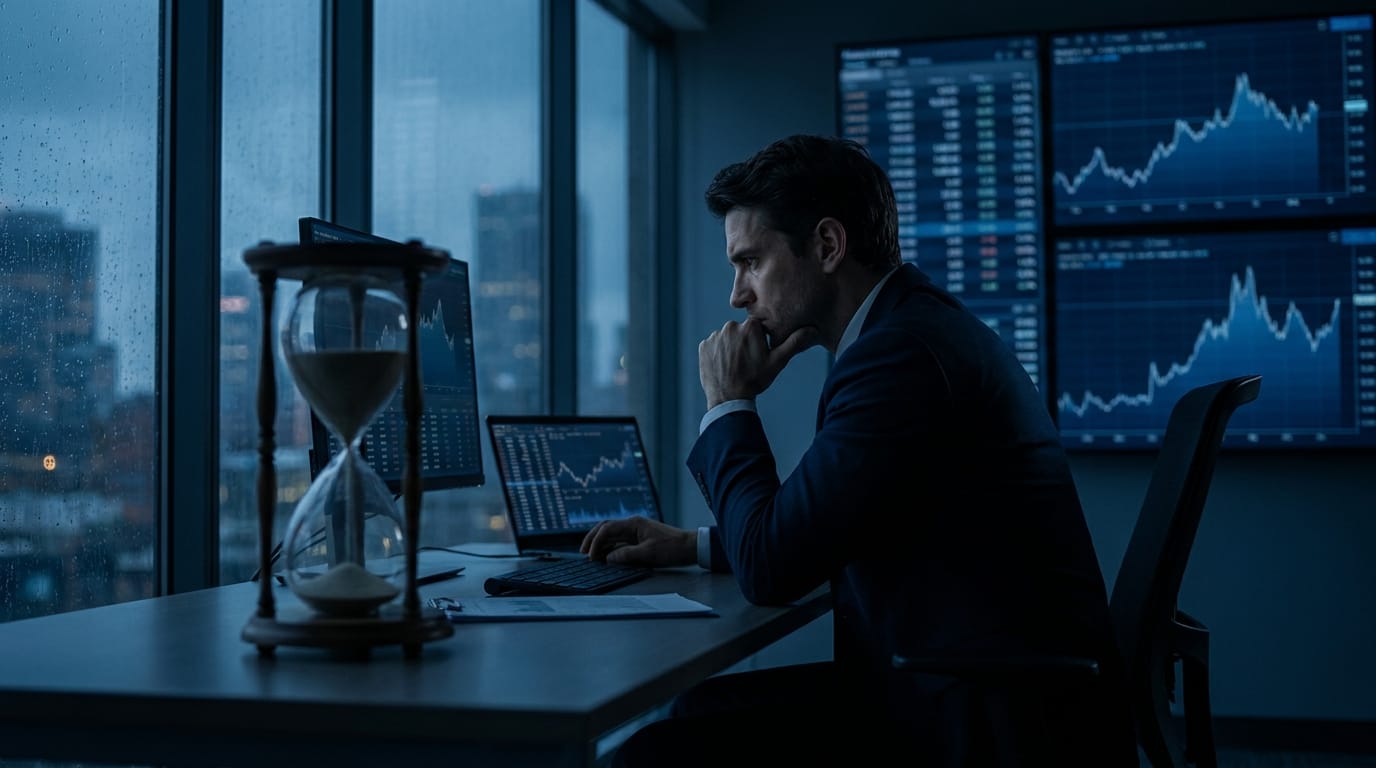
But the AI-safety debate is the story everyone is watching, and it’s the wrong one to trade on: the second catalyst hiding in plain sight is the broader macro backdrop — meaning the exact long-duration AI names Amodei just talked down are the ones most exposed to a hawkish surprise, deepening losses on exactly the names that carried the rally.
The China Counter-Signal
The China counter-signal is a critical piece of the puzzle. China’s Foreign Ministry spokesperson Guo Jiakun called the CEOs’ comments “fear mongering” and said the calls would disrupt the process of global AI governance. China’s Minister of State Security, Chen Yixin, published an article calling for the acceleration of construction of an AI security risk prevention and control system.
The Trump administration is urging technology companies, not the government, to slow AI development, citing concerns that excessive regulation could allow China to gain a technological advantage. The investment takeaway is clear: a US-only voluntary slowdown, unmatched by China, doesn’t actually cut global AI capex — it may just reshuffle who captures it.
Spenders vs. Suppliers
This isn’t a Nvidia story — it’s a test of whether the entire AI-capex flywheel is as durable as the rally assumed. It’s a test of whether the whole complex can withstand the pressure of a voluntary slowdown from the industry’s most influential players, even as global demand for AI infrastructure continues to grow.
What This Means for Your Positioning
The AI thesis didn’t break on Monday, but the people who built it just told you to price in risk they can’t yet quantify, and the Fed meets in 48 hours — so the question isn’t whether to panic, it’s whether your SMH, SOXX and mega-cap tech exposure is still a bet you’d make knowingly today rather than one you’re holding by default.
Comments ()